Answer Engine Optimization (AEO) is the practice of structuring content so it can be extracted and delivered as a direct answer by search and AI systems.
While traditional search engines return a list of links for users to evaluate, answer engines like Google’s AI Overviews, ChatGPT, Perplexity, and Alexa return a single synthesized response.
AEO ensures your content is the source that powers that response. It relies on clear question and answer formatting, semantic structure, schema markup, and concise factual writing that machines can parse, trust, and present as the definitive reply.
To understand how AEO fits into the broader evolution of search, see The Shift from SEO to GEO
Search Engines vs Answer Engines
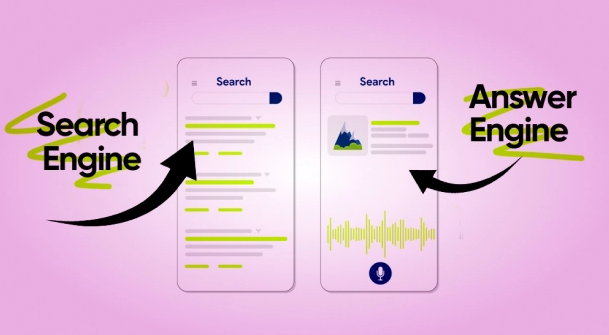
The distinction between a search engine and an answer engine is fundamental to understanding AEO.
A search engine is an information retrieval system. You give it a query, and it returns a ranked list of links. The user is responsible for evaluating, comparing, and clicking. Google in its classic form is a search engine.
An answer engine is an information delivery system. You give it a question, and it returns a single response, often in natural language, often without requiring further interaction. ChatGPT, Perplexity, Alexa, Siri, and Google’s AI Overviews all function as answer engines.
Key differences:
- Search engines prioritize choice; answer engines prioritize closure.
- Search engines return many results; answer engines return one synthesized answer.
- Search engines depend on user judgment; answer engines apply machine judgment on the user’s behalf.
- Search engines reward visibility; answer engines reward authority.
The user behavior driving this shift is what some have called “zero click search.” Studies have shown that a large percentage of Google searches now end without any click. As AI Overviews expand, that share is climbing. People are getting their answers in the interface itself.
Why AEO Matters Now
AEO matters because the answer is becoming the destination. If your content is not part of the answer, you are not part of the conversation.
This makes Voice Search Optimization for Modern Brands a critical part of modern AEO strategy.
Three forces make AEO urgent:
- AI Overviews on Google now appear for a growing share of informational queries, often pushing traditional results below the fold.
- Voice assistants answer questions with a single response, not a list. There is no #2 in voice search.
- Generative AI tools like ChatGPT and Perplexity have become primary research interfaces for millions of users.
For businesses, this changes the question from “how do I get clicks” to “how do I get cited.” A user who hears or reads the answer your content powered may not click, but they remember the brand attribution, ask a follow up that mentions you, or search you directly later.
How Answer Engines Decide What to Surface
Answer engines weigh several signals when choosing what to deliver. While the exact algorithms are proprietary, the patterns are well documented.
Answer engines favor content that:
- Provides a direct, self contained answer in the first sentence or two of a section.
- Is structured with clear headings phrased as questions or topics.
- Uses lists, tables, and definition blocks for scannable extraction.
- Includes structured data such as FAQ schema, HowTo schema, or Article schema.
- Comes from a source the engine recognizes as authoritative on the topic.
- Aligns precisely with the phrasing and intent of the user’s question.
- Avoids hedging language that makes the answer feel uncertain.
Notice how different this is from old SEO advice. A 3,000 word guide that “covers everything” can lose to a 600 word page that answers one specific question with surgical clarity.
Featured Snippets vs AI Answers
Featured snippets were the precursor to AI answers. Both occupy the prime real estate above traditional results. Both extract content directly from a source. But they differ in important ways.
For a deeper breakdown, refer to Featured Snippets: A Complete Guide
Featured snippets:
- Quote a specific passage from a single source.
- Display the source URL and title clearly.
- Drive measurable click through traffic.
- Reward exact match formatting and traditional SEO signals.
AI answers:
- Synthesize information from multiple sources into a new response.
- Cite sources but often as small, easily missed links.
- Drive less direct traffic but build brand recall.
- Reward semantic relevance, factual depth, and structural clarity.
Optimizing for featured snippets remains useful because the same content patterns help with AI answers. The difference is that featured snippets reward you with a click, while AI answers reward you with a mention.
How to Structure Content for Direct Answers
Effective AEO content follows a recognizable pattern. The structure is not rigid, but the principles are.
A high AEO page typically includes:
- A clear H1 that matches the user’s likely question.
- A “Quick Answer” or summary block within the first 100 words.
- H2 subheadings phrased as natural questions.
- Short paragraphs of two to four sentences.
- Bullet points and numbered lists for steps, comparisons, and criteria.
- Definition blocks that explicitly state “X is Y” with no hedging.
- A detailed FAQ section that addresses adjacent questions.
- Schema markup that maps the content to recognized entities and types.
Writing style matters as much as structure. AEO favors:
- Declarative sentences over equivocal ones.
- Specific numbers over vague ranges.
- Named entities over pronouns.
- Active voice over passive voice.
- Plain language over jargon, with technical terms defined when used.
In practice, this is exactly what Writing Content for Conversational AI focuses on.
The Role of Schema Markup in AEO
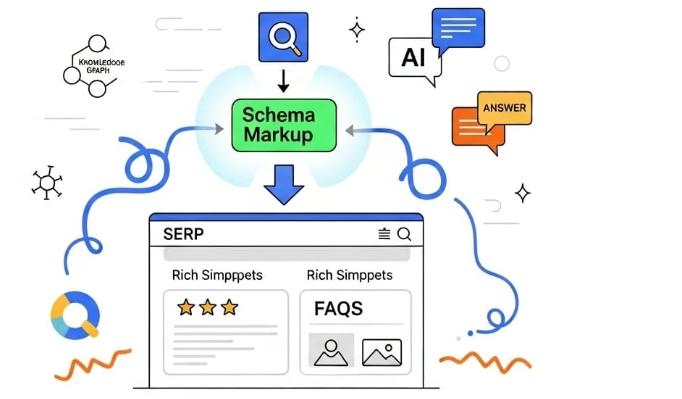
Schema markup is the structured data vocabulary that helps machines understand the meaning and relationships within your content. While not mandatory for AI inclusion, schema dramatically increases the odds.
The most useful schema types for AEO include:
- FAQPage for question and answer blocks.
- HowTo for step by step instructions.
- Article and NewsArticle for editorial content.
- Product and Review for commerce pages.
- Organization and Person for entity recognition.
- BreadcrumbList for content hierarchy.
Schema does not guarantee inclusion in an AI answer, but it removes ambiguity. When a model sees a clearly marked FAQ block, it can extract the question and answer with high confidence.
Common AEO Mistakes to Avoid
Many brands attempt AEO but undermine themselves with avoidable errors.
Common mistakes include:
- Burying the answer below long introductions.
- Using vague headings like “Overview” instead of question based ones.
- Writing in a corporate voice that hedges every claim.
- Skipping FAQ sections or filling them with promotional fluff.
- Failing to update content as facts change.
- Ignoring entity clarity, leaving the brand or product unnamed in key passages.
- Treating AEO as a one time fix rather than an ongoing practice.
To implement this properly, follow How to Implement FAQ Schema Correctly
How AEO Fits Into a Broader Content Strategy
AEO is not a replacement for content strategy. It is a quality standard that should run through every piece of content you publish. Whether you are writing a blog post, a product page, a help article, or a press release, the AEO question is the same: can a machine extract a clean, accurate answer from this content and present it with confidence?
When the answer is yes, your content compounds. It earns featured snippets, AI citations, voice answers, and direct traffic. When the answer is no, it sits on your site doing none of those things.

FAQ
What does AEO stand for?
AEO stands for Answer Engine Optimization. It is the practice of structuring content so it can be extracted as a direct answer by AI systems and answer engines.
How is AEO different from SEO?
SEO focuses on earning a position in a list of links. AEO focuses on being delivered as the answer itself, often without a click.
How is AEO different from GEO?
AEO is a subset of the broader GEO discipline. AEO focuses specifically on direct answer delivery, while GEO covers the full optimization for generative AI systems.
Do I still need traditional SEO if I do AEO?
Yes. Traditional SEO signals like crawlability, backlinks, and on page optimization still matter. AEO builds on that foundation.
What types of content perform best with AEO?
Definition pages, FAQ pages, how to guides, comparison pages, and concise informational articles tend to perform best.
Is FAQ schema required for AEO?
Not required, but highly recommended. It significantly improves the odds of being extracted by both featured snippets and AI answers.
How long should an AEO answer be?
The direct answer should typically be 40 to 60 words. Surrounding context can be longer, but the core answer should be concise and self contained.
Do voice assistants use AEO content?
Yes. Voice assistants rely heavily on the same structured, direct answer content that powers AI Overviews and featured snippets.
Can AEO hurt my SEO? No. Well executed AEO improves overall content quality and tends to lift SEO performance as well.
How do I measure AEO success? Track featured snippet appearances, AI Overview citations, voice answer mentions, and brand searches following AI exposure.
Should every page on my site be optimized for AEO? Not every page, but every page that targets an informational query should follow AEO principles.
Does AEO work for B2B? Yes. B2B buyers increasingly use AI tools for research, making AEO essential for vendor consideration.
What is a “Quick Answer” block? A short, summarized response placed near the top of a page that gives the most important information in two to four sentences.
Can I use AI to write AEO content? You can, but human editing is essential to ensure factual accuracy, distinctive voice, and authoritative signals.
Key Takeaways
- AEO is the discipline of being the answer, not just appearing in the results.
- Answer engines synthesize responses; they do not show ten blue links.
- Direct, structured, schema supported content wins inclusion.
- Featured snippet tactics translate well to AI answers.
- AEO complements both SEO and GEO and should run through every informational page.


Be First to Comment